The Equity and Policy Implications of Long-Distance Commuting in the Greater Los Angeles region

2026-01-02T07:08:17-07:00

This study examined the equity implications of supercommuting in California, with a focus on the Los Angeles region (comprised of Imperial, Los Angeles, Orange, Riverside, San Bernardino, and Ventura counties). We analyzed equity in terms of the housing and transportation expenditure burdens borne by super-commuters.
The Equity and Policy Implications of Long-Distance Commuting in the Greater Los Angeles region2026-01-02T07:08:17-07:00

Expanding sustainable transportation access for residents and staff at Century Villages at Cabrillo

2026-01-02T07:08:13-07:00

The overall research objective is to produce transportation research on access to opportunity for low-income and communities and people of color, done in partnership with community partners.

Expanding sustainable transportation access for residents and staff at Century Villages at Cabrillo2026-01-02T07:08:13-07:00

Evaluation of a Large Scale Universal Basic Mobility Wallet in South Los Angeles

2026-01-02T07:08:13-07:00

Los Angeles is launching the largest mobility wallet pilot, where 1,000 people in South Los Angeles will receive $150 per month for one year. UCLA and UC Davis researchers will complete a comprehensive mixed-methods evaluation examining travel trends, experiences, and spending for L.A.’s program.

Evaluation of a Large Scale Universal Basic Mobility Wallet in South Los Angeles2026-01-02T07:08:13-07:00

Charging Forward: HACLA’s EV Lending Library for Economic Equity

2026-01-02T07:08:13-07:00

The Housing Authority of the City of Los Angeles (HACLA) is piloting a new vehicle lending library program that aims to increase access to job opportunities for low-income communities, relieving the daily stressors associated with unreliable access to transportation.

Charging Forward: HACLA’s EV Lending Library for Economic Equity2026-01-02T07:08:13-07:00

Understanding the accessibility promise of electric carsharing for low-income populations: A BlueLA case study

2026-01-02T07:08:12-07:00

Lewis Center researchers, in partnership with Toole Design Group, examine whether subsidized carsharing services like BlueLA can meet environmental goals and narrow the accessibility gaps facing low-income travelers across Los Angeles.

Understanding the accessibility promise of electric carsharing for low-income populations: A BlueLA case study2026-01-02T07:08:12-07:00

Public Transportation Safety Among University Students

2026-01-02T07:08:15-07:00

This study focuses on the sexual harassment experiences of university students, a population group that is typically more transit-dependent than the general public, and possibly because of their age, more vulnerable to victimization from sexual harassment than other adults.

Public Transportation Safety Among University Students2026-01-02T07:08:15-07:00

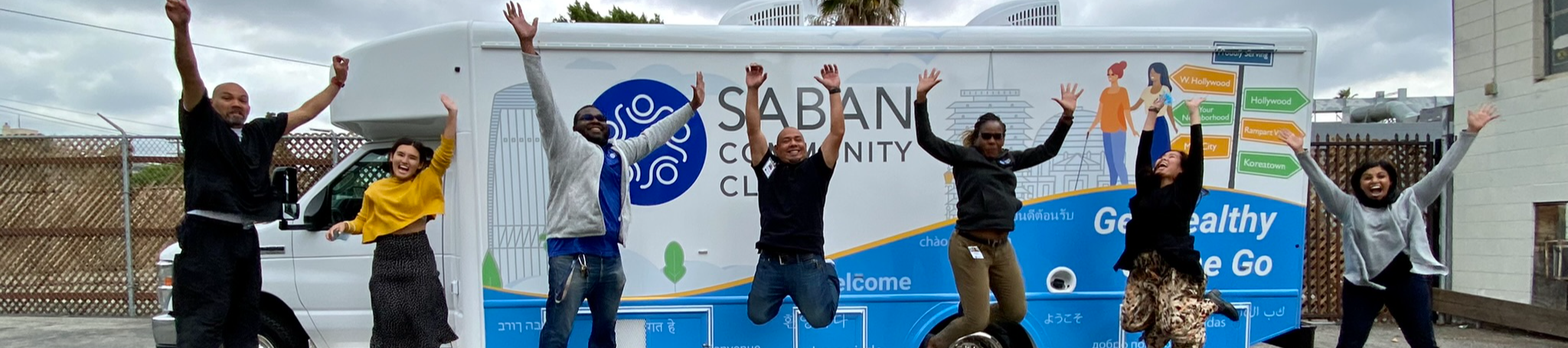
Piloting a Transportation Resources Fair for Patients at the Saban Community Clinic

2026-01-02T07:08:15-07:00

This project will inventory the types of affordable transportation options that could help patients overcome their transportation challenges, along with proposing a model for a resource fair where patients can find out more about their options and enroll on-site.

Piloting a Transportation Resources Fair for Patients at the Saban Community Clinic2026-01-02T07:08:15-07:00

Addressing the Travel Needs of Women and Families

2026-01-02T07:08:16-07:00

This project expands on prior gender and transit research by examining how U.S. transit agencies address women's needs. In includes an updated literature review and a national survey of transit agencies to inventory existing gender-responsive planning, projects, and data collection efforts. Based on the findings, the team will develop a set of toolkits and guidance documents to help transit agencies with gender-responsive planning.

Addressing the Travel Needs of Women and Families2026-01-02T07:08:16-07:00

Analyzing Bus Shelter Provision in Los Angeles County

2026-01-02T07:08:17-07:00

Extreme heat is the deadliest natural hazard in the U.S., yet many bus riders in Los Angeles County wait for transit without shelter from the sun. This project analyzes 10,000+ LA Metro bus stops to understand where shelters exist — and where they don’t. By mapping shelter distribution across temperatures, jurisdictions, and priority populations, we aim to establish a baseline to guide more transit infrastructure in the region.

Analyzing Bus Shelter Provision in Los Angeles County2026-01-02T07:08:17-07:00
Go to Top