Does the Los Angeles region have too many vacant homes?

2026-01-06T14:14:23-07:00

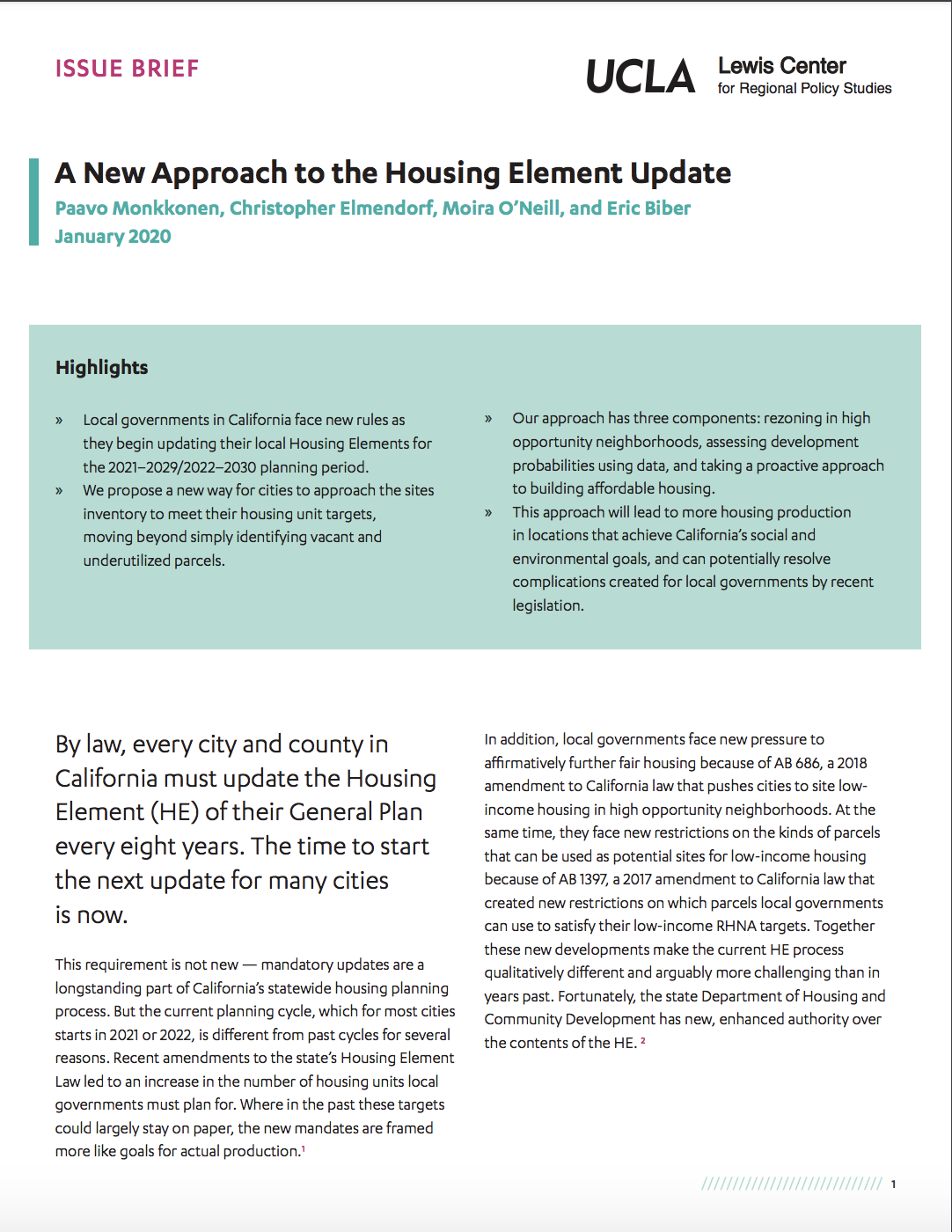
In recent years, vacant homes have increasingly been identified as a potential indicator of speculation or otherwise underutilized housing stock. Recently constructed market-rate and mixed-income housing, in particular, has been cast as villain in this debate, with relatively high vacancy rates taken as a sign that this type of housing isn’t needed. Using Los Angeles as a case study, this working paper explores the nature, extent, and causes of housing vacancy, and draws conclusions about what should be done about vacant homes in high-cost locations like L.A.

Does the Los Angeles region have too many vacant homes?2026-01-06T14:14:23-07:00

Opposition to development or opposition to developers? Experimental evidence on attitudes toward new housing

2026-01-06T14:14:24-07:00

Building new housing appears to be part of the housing crisis solution. However, this brief finds that opposition to development is high due to fear of personal losses and resentment of developer gains.

Opposition to development or opposition to developers? Experimental evidence on attitudes toward new housing2026-01-06T14:14:24-07:00

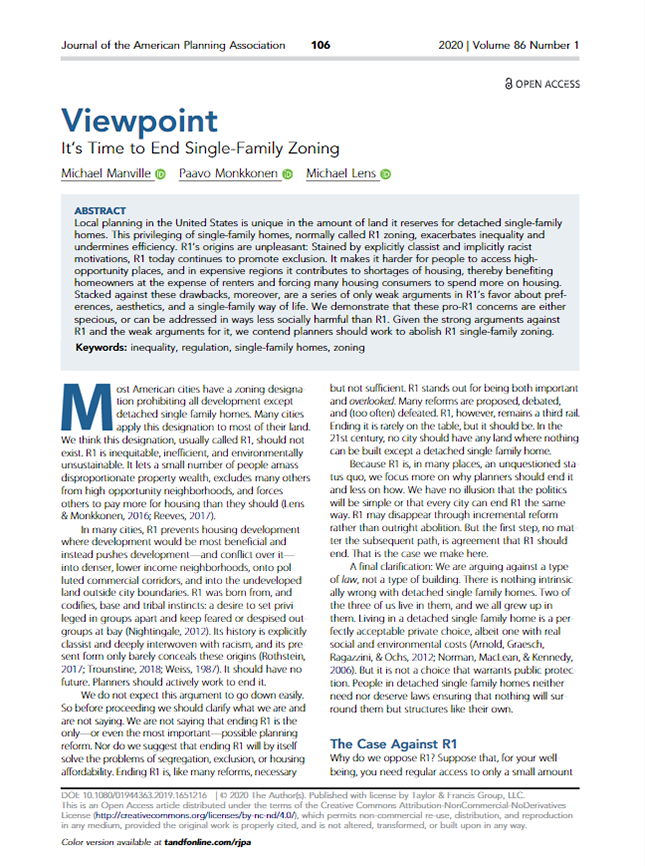
It’s Time to End Single-Family Zoning

2026-01-06T14:14:24-07:00

In this Viewpoints, the authors write how R1 zoning in the United States promotes exclusion and exacerbates inequality, benefiting homeowners at the expense of renters and limiting access to high-opportunity places. They argue that these negative impacts outweigh weak arguments for R1 and that planners should work to abolish it.

It’s Time to End Single-Family Zoning2026-01-06T14:14:24-07:00

Affordable Housing Primer

2026-01-06T14:14:21-07:00

This primer will help policymakers, public officials, advocates, and other stakeholders better understand the many different types of affordable housing, what they accomplish, how they’re regulated, and who they serve.

Affordable Housing Primer2026-01-06T14:14:21-07:00
Go to Top