
Hannah Howland
Biography
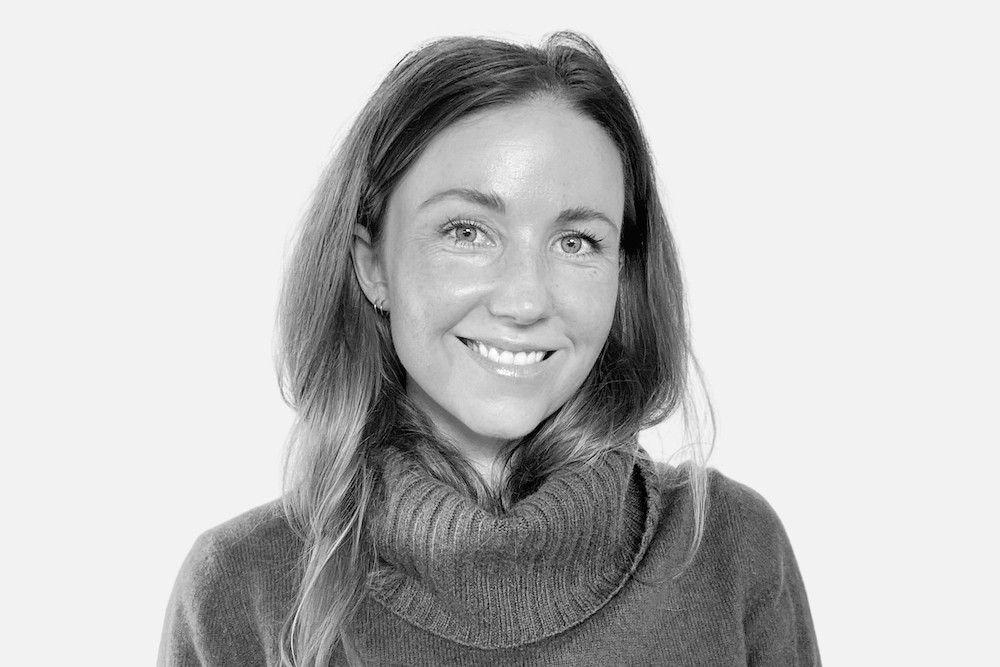
Hannah Howland is a licensed architect with over a decade of professional experience in multifamily housing. She has led design teams on both market-rate and affordable developments across California, and has overseen all phases of project delivery from conceptual design through construction administration. Her built work ranges from small pro-bono design-builds to multi-million-dollar mixed-use developments, reflecting a commitment to community-centered design as a tool for equity-building and place-making in all contexts.
While pursuing her master’s in urban and regional planning at the UCLA Luskin School of Public Affairs, Hannah has continued to practice architecture and recently began a new role as Planning Fellow at Office Of: Office. She has had the pleasure of serving as a teaching assistant in the Urban Planning Department, and as a graduate student researcher in the Institute of the Environment and Sustainability. The proud recipient of the 2025 Harvey S. Perloff Fellowship Continuing Student Award, Hannah’s interdisciplinary work is guided by the belief that good design begins with good policy, and elevates all people as subject matter experts and co-creators of their respective built environments.
Project Overview
The January 2025 Eaton Fire displaced thousands of Altadena residents. In response, the Community Rebuilding Response (CRR) program — led by Office Of: Office and in partnership with SOMOS Group, Greenline Housing Foundation and Little Tokyo Service Center — was established to provide pro-bono design, policy, and social services to Altadena homeowners. Despite these efforts, many still face severe funding gaps due primarily to un- or under-insurance and rising construction costs.
This project examines a novel strategy to address these gaps –– Land Banking Lite.
The Land Banking Lite model does not rely on large-scale, outright property acquisition, and land owners are thus not required to forfeit property ownership. Instead, this model prevents speculative development and displacement through innovative financing products and strategies designed to give families immediate financial capital without dispossession. As many residents near the end of their emergency loss-of-use coverage, this financial capital can help cover interim housing and redevelopment costs, buying residents time to make more informed decisions about how to rebuild.
Why is this topic, specifically, important to you?
Post-disaster recovery in Altadena is important because across every metric, the magnitude of this loss is almost incomprehensible. Observed patterns from other disaster-impacted communities suggest a fairly narrow window for intervention; I feel the urgency of our closing window, and a quick response is critical for preventing large-scale turnover and ensuring that those who remain aren’t forced to do so under crushing financial burden. Thinking about the loss of my own community guides how I approach the task of co-generating equitable solutions in partnership with residents and the organizations working alongside them.
I’m grateful for the opportunity to collaborate with the Lewis Center and I look forward to drawing on the skills and knowledge I’ve gained here at Luskin to strengthen this work’s impact.
Who are the partners involved in this project and how will you be working with them?
This project’s principal partner is my client, Office Of: Office (OOO), but we’ve been learning from and working alongside a range of organizations and individuals with expertise relevant to various aspects of this study.
How do you hope that this project will impact the field moving forward?
I hope that this project can support Altadena residents in at least two ways: First, by helping to synthesize a very complex, rapidly shifting recovery landscape; and second, by contributing to the development of a realistic, viable and innovative financial product designed to help fill funding gaps and allow residents to remain in their community.
Additionally, at a time when natural disasters are only growing in frequency and intensity, I hope this work can offer a replicable framework for future post-disaster recovery that builds on existing efforts from both in and outside of Altadena. I also hope to address broader questions of who remains most at risk of permanent displacement, what tools or interventions may mitigate these risks, and how recovery can be reimagined to promote community-led redevelopment.
Fellow at a Glance
FELLOWSHIP YEAR
ACADEMIC BACKGROUND
PROJECT TITLE