Research Roundup: The Effect of Market-Rate Development on Neighborhood Rents
angelawu2026-01-21T13:30:27-07:00A roundup of recent research that has delved into the neighborhood-level impacts of market-rate housing.

A roundup of recent research that has delved into the neighborhood-level impacts of market-rate housing.
The downstream effects of exclusionary, low-density residential zoning on health and health equity should make scholars and policy makers focus on reforming zoning to make housing more plentiful and affordable in healthy neighborhoods.
In this paper I introduce the concept of the “zoning buffer” — the gap between the existing housing stock and the maximum number of homes allowed by current zoning — and describe how it affects land values and ultimately the production and affordability of housing.
This report provides detailed analysis on where California's housing has been, where it’s at and where it’s headed when it comes to possible scenarios and policy alternatives for the future.
This report examines where California's housing has been, where it’s at and where it’s headed when it comes to possible scenarios and policy alternatives for the future.
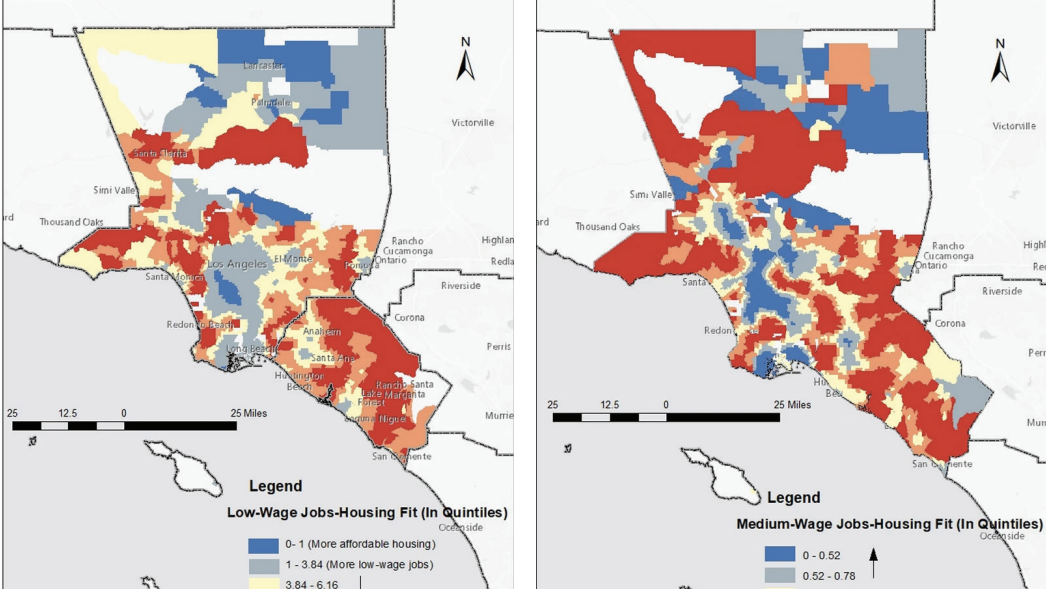
The study examined the relationship between housing availability near workplaces and commute distance for lower-, medium-, and higher-wage workers in Los Angeles.
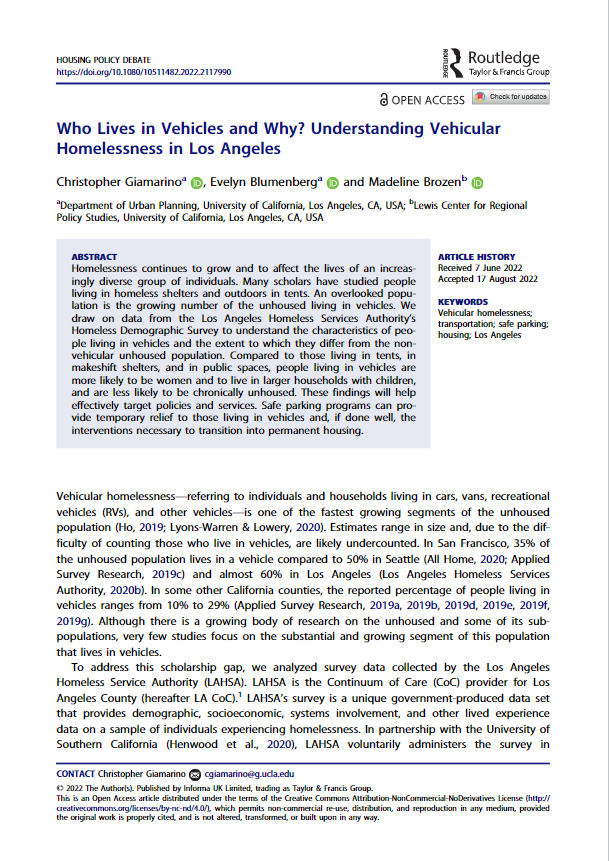
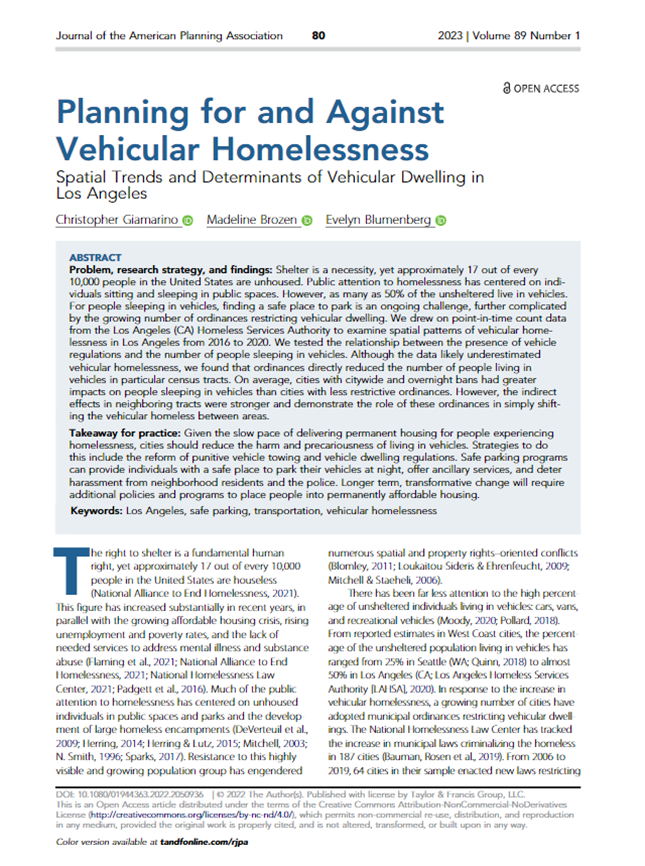
Almost half of Los Angeles's unsheltered population live in their vehicles. Over the years, local complaints have amplified the proliferation of vehicular-dwelling criminalization ordinances — making it difficult for people to locate safe places to park, elevating fears of being towed, ticketed, or interacting with the police.
What are the unique characteristics of people living in vehicles in Los Angeles? These findings will help effectively target policies and services, such as safe parking programs that can offer temporary relief and interventions necessary to transition into permanent housing.
Discover the prevalence of vehicular homelessness in Los Angeles County and the impact of regulations on people living in their vehicles. Findings suggest cities should reduce harm and precariousness through reforming punitive regulations and implementing safe parking programs while pursuing permanent affordable housing solutions.
This report aims to gain a better understanding of unhoused and unsheltered people living in vehicles.