Understanding Who Lives in Cars in Los Angeles County
superadmin2026-02-06T07:00:40-07:00This report aims to gain a better understanding of unhoused and unsheltered people living in vehicles.

This report aims to gain a better understanding of unhoused and unsheltered people living in vehicles.
Measure ULA is a November 2022 ballot initiative that would increase taxes on the sale of properties valued $5 million or above in Los Angeles, but there is concern it may depress new housing production. We develop a model for identifying projects that may be most at risk of not being built because of the increased tax.
This paper analyzes Measure ULA, a City of Los Angeles ballot measure which would reform transfer taxes to raise money for affordable housing/homelessness prevention.
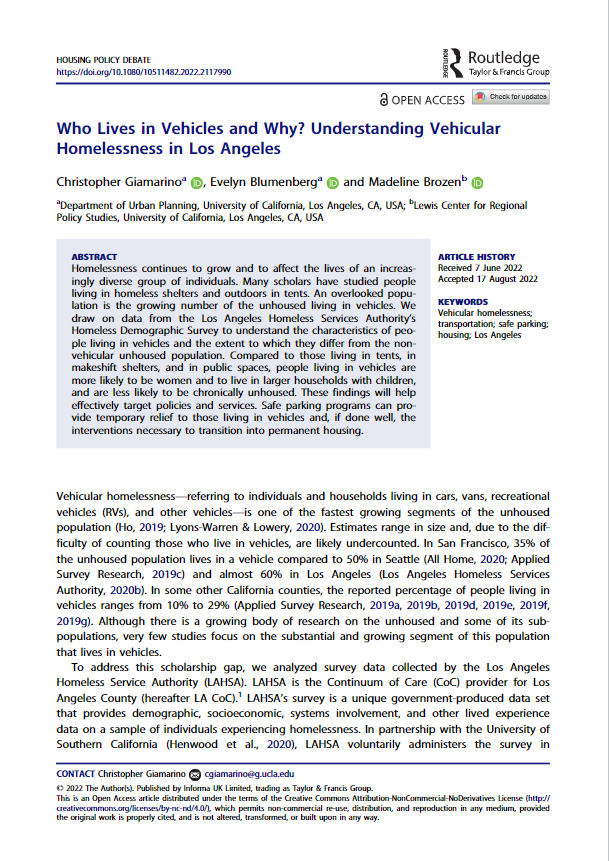
What are the unique characteristics of people living in vehicles in Los Angeles? These findings will help effectively target policies and services, such as safe parking programs that can offer temporary relief and interventions necessary to transition into permanent housing.
Almost half of Los Angeles's unsheltered population live in their vehicles. Over the years, local complaints have amplified the proliferation of vehicular-dwelling criminalization ordinances — making it difficult for people to locate safe places to park, elevating fears of being towed, ticketed, or interacting with the police.
Low-income households stand to benefit from new carsharing models that can provide car access without the financial burden of car ownership. New models are emerging using different pricing models, location considerations, and electric vehicles.
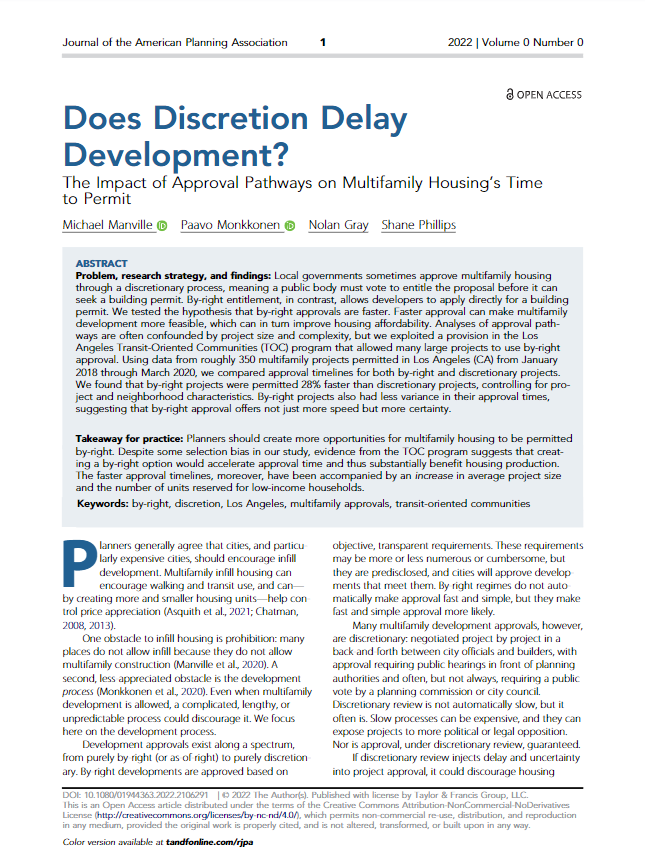
Local governments sometimes approve multifamily housing through a discretionary process, meaning a public body must vote to entitle the proposal before it can seek a building permit. By-right entitlement, in contrast, allows developers to apply directly for a building permit. We tested the hypothesis that by-right approvals are faster. Faster approval can make multifamily development more feasible, which can in turn improve housing affordability.
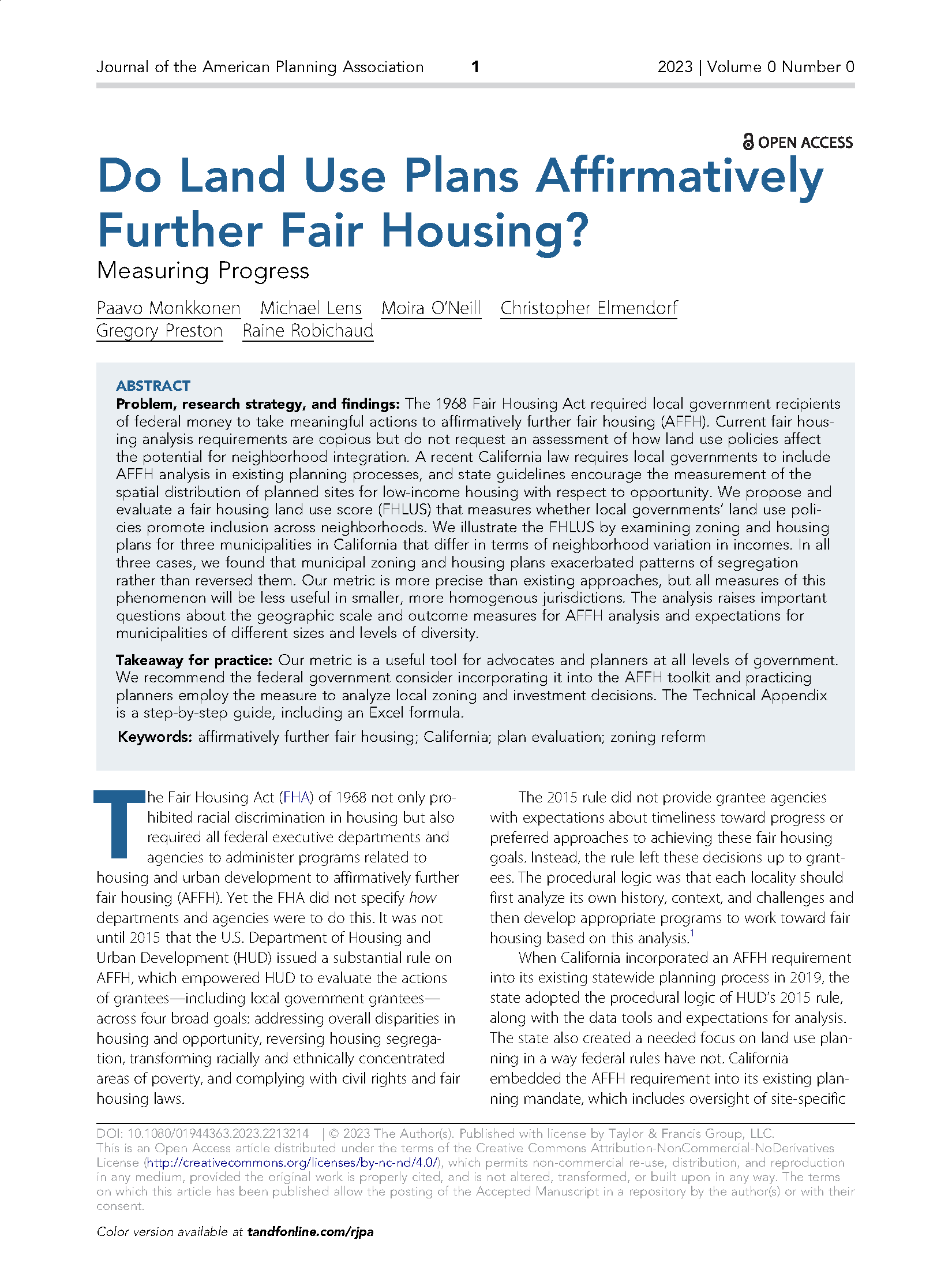
We propose and evaluate a fair housing land use score (FHLUS) that measures whether local governments’ land use policies promote inclusion across neighborhoods.
Researchers propose and evaluate a new metric to measure whether or not local land use policies promote inclusion across neighborhoods.
Several policies and programs and evolving case law address residential segregation and health disparities in the United States, combatting more than a century of exclusionary policies embedded in land use and housing codes.